Blogger's note: I try to resist posting too much bike stuff. It's not always explicitly environmental. I think this one is pushing the limit of things relevant to this blog. But I think it's neat.
Streetsblog made a video of interviews at the Community Board Meeting, including newly elected Councilman Brad Lander. The video is boring. Click through it, you'll get the idea.
Here is the video that was played at the beginning if you're interested:
Please participate in the conversation over at the CLORE blog where they have posted the things that didn't get fleshed out.
Here are some scattered notes I took during the conversation -History of Navy base in Vieques pollution. 62 years of bombing. Puerto Rico is the oldest colony in the world.
Javier Cuebas: Speaking about primary strategy of civil disobedience and other tactics. Vieques is a reflection of PR diaspora, has different meanings to people living on the island. Vieques known as 'little sister' - reflection of PR experience. -with the exception of nuclear bombs, all other weapons tested there -extremely sick population as a result. on stateside - two camps - deniers and those who are aware of it. majority of people IN PR are in agreement that vieques is a problem. galvanizes people on the mainland.
at one point navy propoosed transfer of population of vieques to the mainland. dracula plan.
John Arthur Eaves - how did a gringo mississippi lawyer end up on this case? former mayor called him up, due to publicity from another case. why did it begin as a case and become a mission? 1-faith 2-modern day civil rights movt - would not have happened anywhere else in the US 3-explains full cost of war 4-health of the people there 5-vieques best opportunity I have had to make a difference the case - began w/administrative claim. took 4-5 years to collect medical records. doctors didn't even know teh illness the ppl were facing told by politicians that the votes were not enough, case dismissed, no evidence that navy's activities relied on faulty ATSDR conclusions. all sorts of procedural issues, eventually moved to San Juan ct, govt moved to dismss for sovereign immunity discovered through FOIA that USNavy knew of problems in 1978 this is where it is now.
Vieques is now a superfund site.
ATSDR
JC - ADOVACY AND ALLIANCES TO BRING people w/ different ideologies together PR senate passed unanimous resolutions about Vieques casapueblo - community organizing in PR everything connected for advocacy through regulations "politicians, they like to be in office" identify commonalities among the actors. develop political alliances
The Indypendent Blog posted this brief article about the effects of Greenpeace's recent big campaign against Nestle. Greenpeace has really started to nail down how to wage a successful campaign with cutting viral videos and aggressive pushes against well-known corporations. It's the kinda stuff that makes environmentalists go "oo yeah, you get 'em Greenpeace". And it seems that the campaign is having rapid success, but not without a drawback, pushback from Indonesian palm oil farmers.
At CUNY Law we speak often about organizing and advocacy and the role of the law within that, and I think this issue raises these questions on a big scale. Specifically - how can large environmental groups wage effective campaigns without sacrificing community needs? Can this be done on a large scale or is a smaller community focus required to preserve the lives of workers when one corporation holds all the economic power in a region? Are viral video campaigns inherently exploitive?
And so on.
At the International Law Society's event a few weeks ago "Blood and Capital: Holding Corporations Accountable for Human Rights Violations" we did see some great legal work utilizing the Alient Tort Statute that seems to allow for this type of work. Is there a way that Greenpeace and the other gigantic environmental groups can integrate some of CCR's and EarthRights strategies?
Much to consider, and it's important for all of us to consider these questions in our summer work and beyond.
Regardless, here is the somewhat stomach turning Greenpeace video, in case you haven't seen it.
Do any 3Ls remember or know that only in 2008 did Jewel Avenue get a bike lane?
"A 2007-2008 redesign of Jewel Avenue in Queens added a buffered bike lane, introduced some traffic calming measures and gave pedestrians longer crossing times. Afterward, bike volume along the corridor increased fivefold, and 91 percent of cars now travel at or below the speed limit. Before implementation, local politicians protested the removal of traffic lanes, but the data show that congestion hasn't increased at all."
Check out the link that shares some of the recent stats from the NYCDOT for other great little facts about how much transportation improved as a result of more bike lanes, more bus lanes, etc.
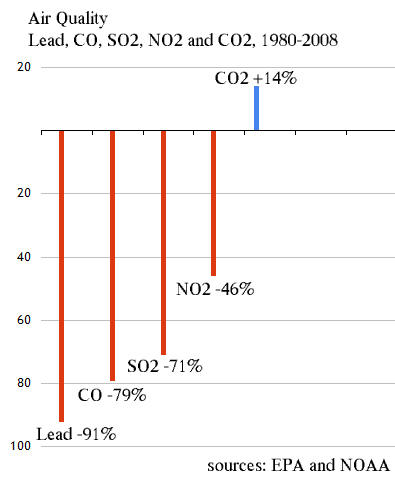
So I'm trying to share things here that relate to the environmental law with a focus on NYC, or just NY. This is neither, but it is funny AND interesting. Conservative think tank attempting to claim that just a growth in prosperity is the result of a decline in greenhouse gas emissions, when in reality, it is environmental regulation. CO2 of course is not regulated and has increased where the other significant emissions have decreased in the past 30 years.